Tommy John Surgery & UCL Repair
Specialized surgical treatment of UCL injuries in throwing athletes, including UCL repair with internal brace augmentation and UCL reconstruction (Tommy John surgery). Treatment is individualized to the athlete's injury pattern, age, level of competition, and performance goals with a focus on safely returning athletes to throwing and competition.
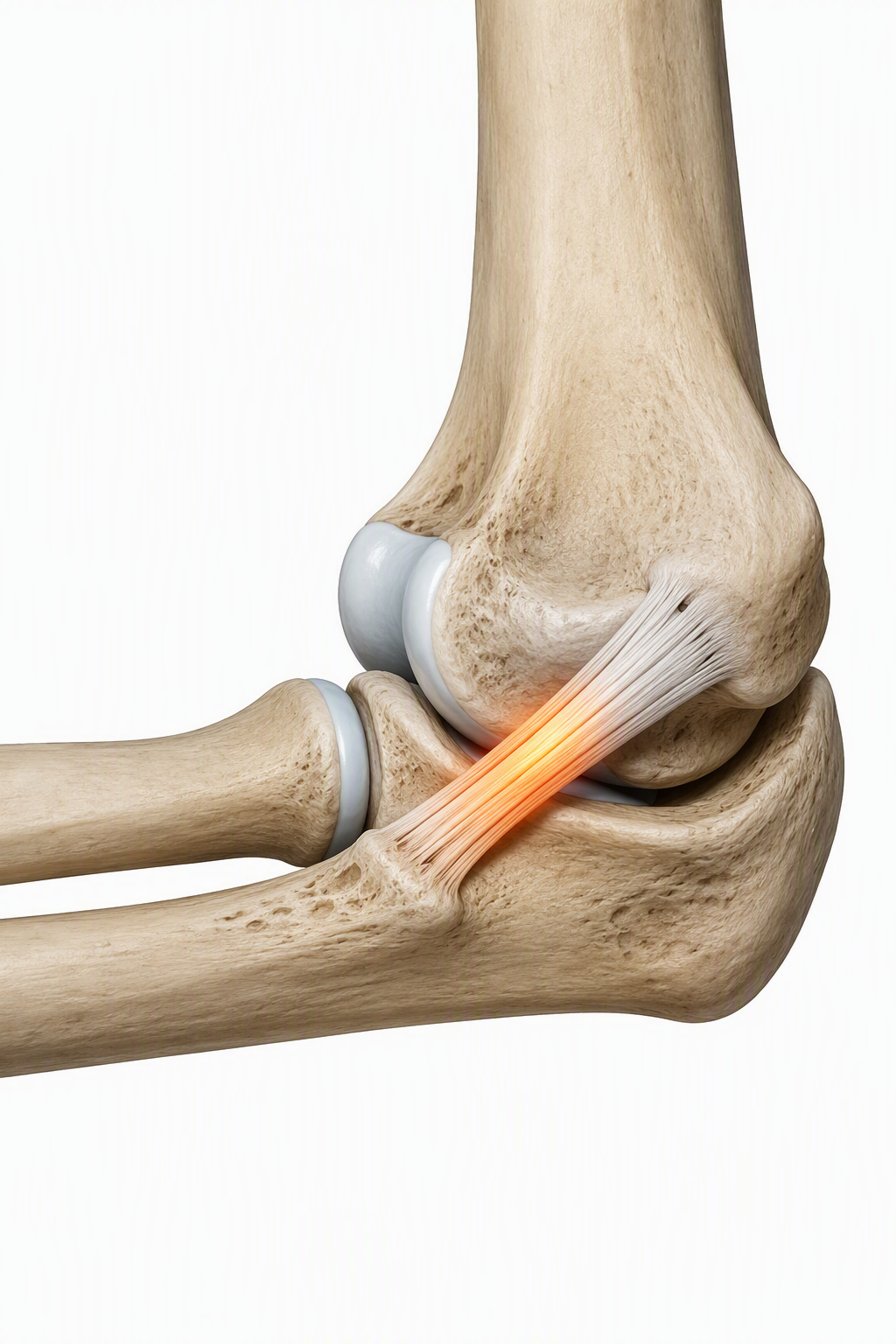
Anatomy of the Ulnar Collateral Ligament (UCL)
The UCL is the primary stabilizing ligament on the inner (medial) side of the elbow. During throwing, tremendous forces are transmitted across the elbow, particularly during the late cocking and acceleration phases of the throwing motion.
The UCL helps resist these forces and maintain elbow stability. Repetitive stress can lead to stretching, partial tearing, or complete disruption of the ligament.
UCL Repair vs Tommy John Surgery
Not all UCL injuries require the same operation.
Advances in sports medicine have expanded the treatment options available for throwing athletes.
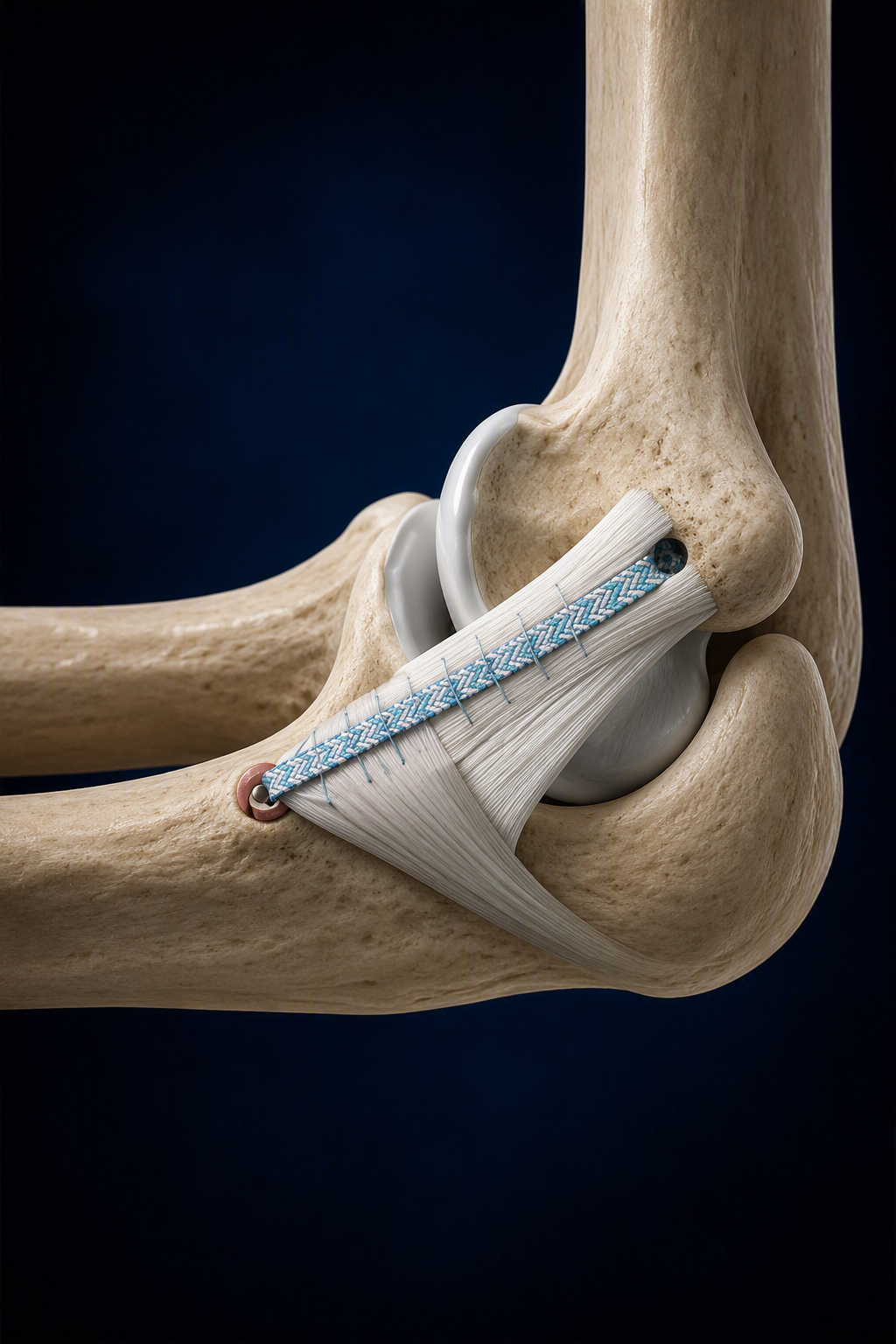
UCL Repair with Internal Brace Augmentatio
UCL repair involves repairing the athlete's native ligament and reinforcing it with a collagen-coated suture tape known as an Internal Brace.
Common Candidates
Younger athletes
Acute injuries
Proximal or distal avulsion tears
Good quality ligament tissue
Potential Benefits
Preserves the athlete's native ligament
Less invasive than reconstruction
Faster rehabilitation
Earlier return to throwing
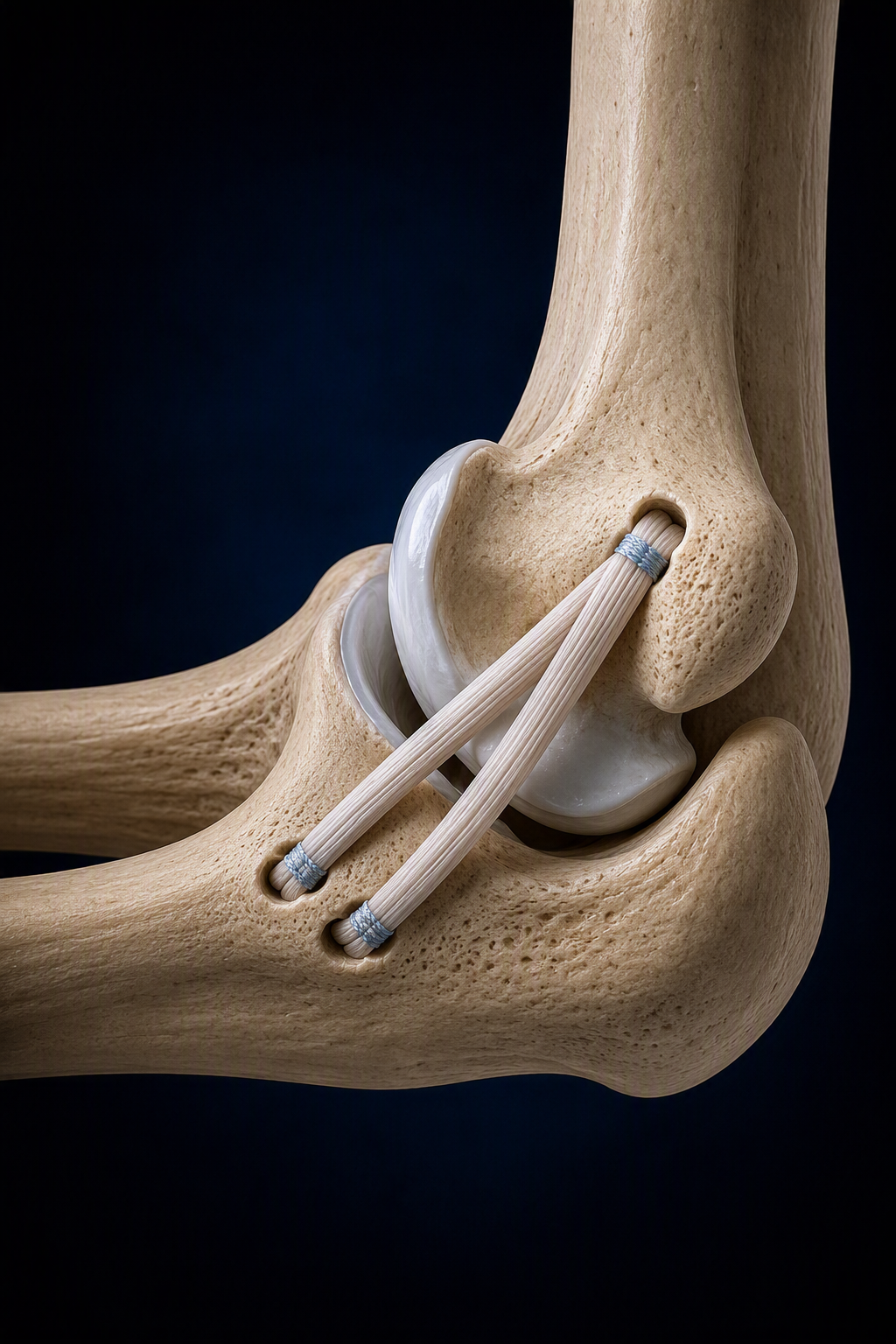
Tommy John Surgery (UCL Reconstruction)
Tommy John Surgery reconstructs the damaged ligament using a tendon graft.
Common Candidates
Chronic UCL tears
Poor tissue quality
Mid-substance tears
Failed non-operative treatment
Failed prior UCL surgery
Goal
Restore elbow stability and allow athletes to safely return to throwing.
When is Surgery Recommended?
Surgery may be considered when:
Non-operative treatment has failed
Significant instability exists
A complete UCL tear is present
Athletes are unable to return to throwing
Performance continues to decline despite rehabilitation
The decision to proceed with surgery is individualized and based on the athlete's goals, injury pattern, age, competition level, and examination findings.
Goals of Surgery
The primary goals include:
Relieve pain
Restore elbow stability
Protect long-term elbow health
Restore throwing mechanics
Maximize performance
Facilitate a safe return to sport
Return athletes to their previous level of competition
Tommy John Surgery reconstructs the damaged ligament using a tendon graft.
Typical Recovery Timeline
Weeks 0–6
Early healing phase
Gradual restoration of motion
Protection of the reconstruction or repair
Weeks 6–12
Progressive strengthening
Continued rehabilitation
Restoration of normal arm function
Months 3–4
Advanced strengthening
Plyometrics
Sport-specific conditioning
Months 4–6
Return-to-throwing progression often begins following UCL repair
Continued performance training
Months 9–12+
Return to competitive throwing following Tommy John Surgery
Ongoing progression based on strength, mechanics, and performance
General Tommy John & UCL Repair
Frequently Asked Questions
-
Tommy John Surgery is a UCL reconstruction procedure in which a new ligament is created using a tendon graft. The reconstruction restores stability to the elbow and allows throwing athletes to return to competition following rehabilitation.
-
UCL repair involves repairing the athlete's native ligament and reinforcing it with an Internal Brace construct. This procedure may be appropriate for select athletes with specific injury patterns and good tissue quality.
-
The appropriate procedure depends on several factors, including the location of the tear, the quality of the ligament tissue, MRI findings, age, level of competition, and athletic goals. A detailed evaluation is necessary to determine the best treatment option.
-
Throwing typically begins in a structured and progressive fashion once healing milestones have been achieved. The timing depends on the specific procedure performed and the athlete's progress throughout rehabilitation.
-
Many athletes successfully return to their prior level of competition following surgery and rehabilitation. Return of velocity is influenced by healing, conditioning, mechanics, strength, mobility, and adherence to the rehabilitation program.
-
Most athletes can return to competitive play following successful surgery and rehabilitation. Return-to-play decisions are based on objective testing, throwing progression milestones, performance metrics, and overall readiness to compete.
-
A hybrid UCL reconstruction combines traditional UCL reconstruction techniques with Internal Brace augmentation. This approach adds additional support to the reconstruction while the graft heals and matures, helping provide stability throughout recovery.
-
While both UCL repair and reconstruction have excellent success rates, reinjury can occur. Proper rehabilitation, throwing mechanics, workload management, and recovery are essential to minimizing future risk.
-
Recovery varies depending on the athlete, the sport, and the procedure performed. Position players often return sooner than pitchers. A personalized rehabilitation and throwing progression is developed for every athlete.
-
Yes. Rehabilitation is one of the most important components of recovery. Physical therapy focuses on restoring motion, strength, throwing mechanics, and overall athletic performance.
-
No. Throwing programs are highly individualized. Factors such as baseball versus softball, pitcher versus position player, age, level of competition, injury severity, and surgical procedure all influence how an athlete progresses back to throwing.
-
Throwing athletes require a unique understanding of shoulder and elbow biomechanics, workload management, throwing mechanics, rehabilitation, and return-to-play decision making. Successful treatment is not simply about healing the ligament. Successful treatment is also about safely restoring performance and helping athletes return to their highest level of competition.
Patient Resources
Surgical Tommy John & UCL Repair
Frequently Asked Questions
-
It is okay to shower with a waterproof cover/bag over it on post op day 1. Keep the dressing dry.
-
You may not resume driving until you are no longer wearing your brace, which is after 6 weeks post op.
-
This really depends on the individual patient specifically with respect to job demands (labor vs desk job). Desk jobs may return to work within days. Labor jobs typically around 3 months.
-
You will be able to participate in certain activities in a progressive manner throughout your recovery. These activities depend on your progress and timeframe of recovery and will be determined by our therapist and/or doctor.
-
The typical therapy program will be two times per week for a minimum of 3-4 months.
-
This is variable, of course, but we provide you with a pain management protocol to keep you comfortable until your first post-operative visit. Remember that most of our patients have regional anesthesia, it is not unusual to have numbness and tingling that can present for several days following your surgery.
-
You will typically begin a progressive throwing program around 4.5 months post-op.
-
Your throwing program will be progressive. You will start throwing at shorter distances at light effort and build up to further distances. Once you have completed our flat-ground throwing program you should visit the office for a clinical re-evaluation. At that point, you may be ready to begin your mound protocol.
-
It typically takes one year from your surgery to compete in a game again.
-
Any signs of infection should be reported immediately - these include increased drainage (usually thick, cloudy, foul smelling), redness, increased warmth, and fevers (T>101.8).