Throwing Athlete Elbow
Specialized care for elbow injuries unique to baseball, softball, and overhead athletes. Treatment is focused on identifying the source of pain, restoring performance, and helping athletes safely return to throwing and competition.
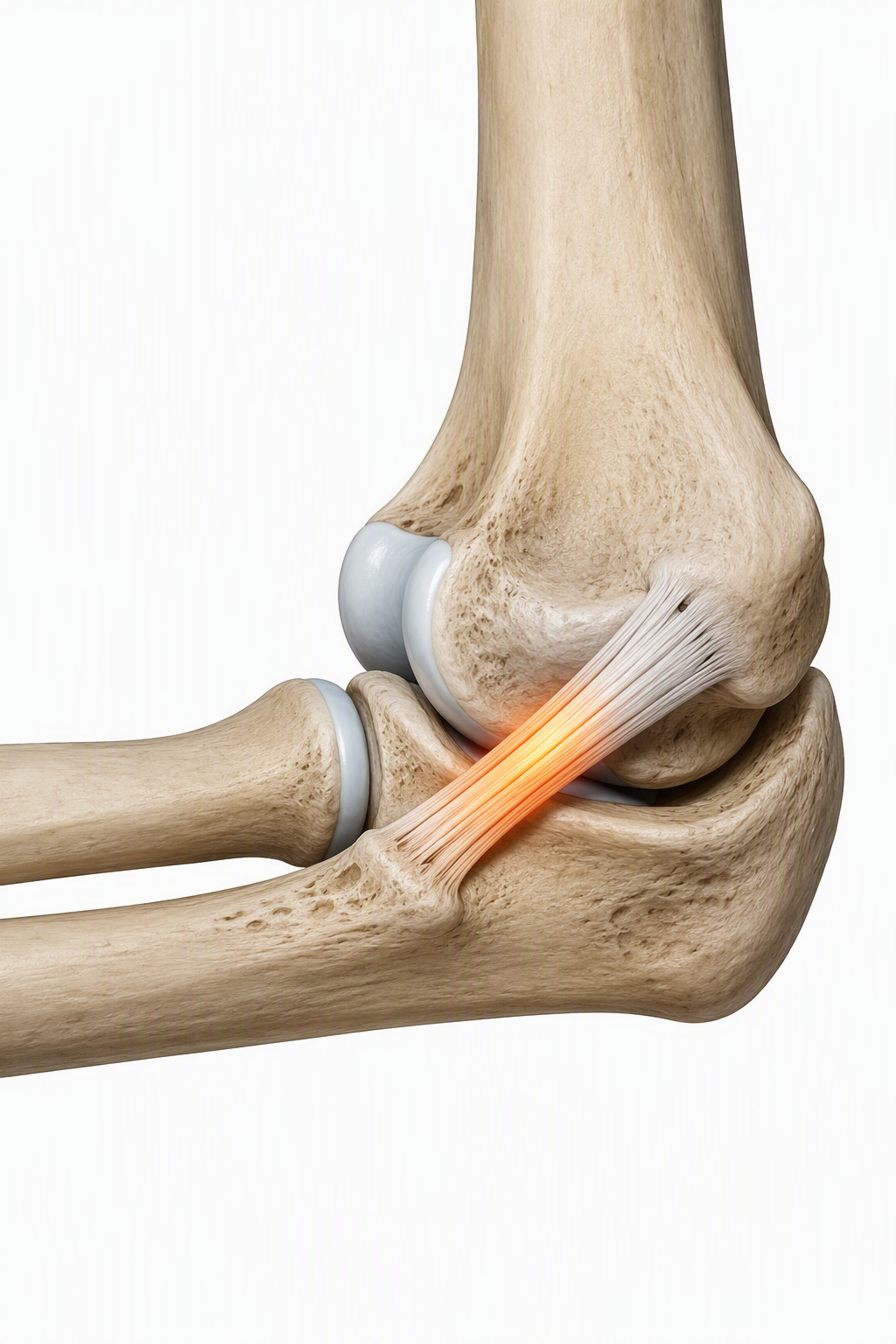
Understanding the Throwing Elbow
Anatomy of the Throwing Elbow
The elbow experiences tremendous stress during the throwing motion. While the UCL plays an important role in stabilizing the inner aspect of the elbow, multiple muscles, tendons, growth plates, cartilage surfaces, and bony structures work together to allow efficient throwing.
Repetitive throwing can place significant demands on these structures and may lead to a variety of injuries beyond the UCL.
Common Causes of Throwing Elbow Injuries
Throwing injuries often develop gradually over time due to repetitive stress.
Common contributing factors include:
Repetitive throwing
Poor throwing mechanics
Sudden increases in throwing volume
Year-round participation
Muscle fatigue
Inadequate recovery
Shoulder mobility deficits
Weakness throughout the kinetic chain
Common Throwing Elbow Conditions
Valgus Extension Overload (VEO)
Valgus extension overload occurs when repetitive throwing causes the bones and soft tissues in the back of the elbow to repeatedly impact one another causing posteromedial impingement
Common Symptoms
Pain in the back of the elbow
Loss of extension
Pain during late acceleration and follow-through
Decreased performance
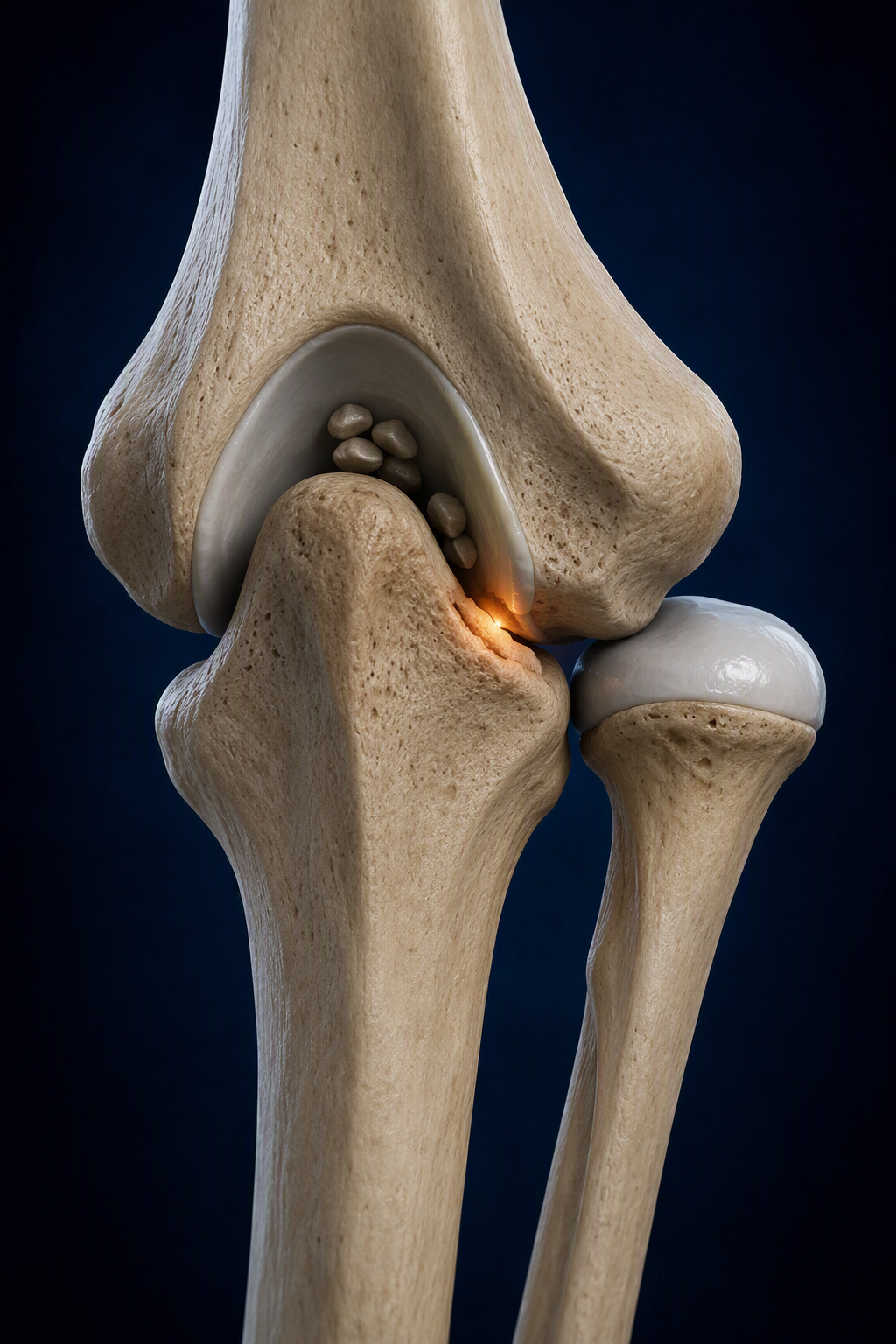
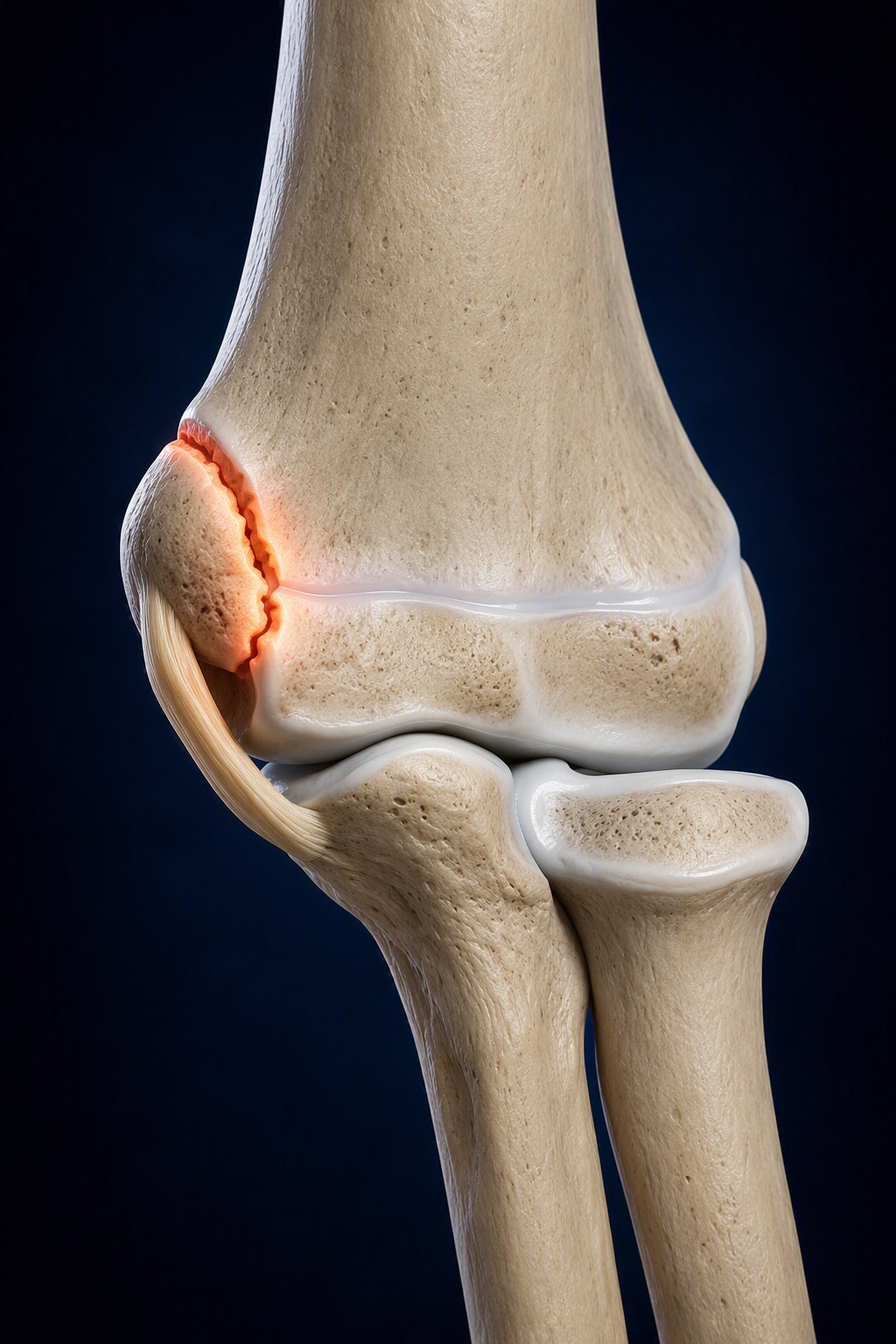
Little League Elbow
Little League Elbow is an overuse injury involving the growth plate on the inner side of the elbow.
Common Symptoms
Medial elbow pain
Decreased throwing velocity
Pain during throwing
Tenderness over the growth plate
Most commonly seen in athletes with open growth plates.
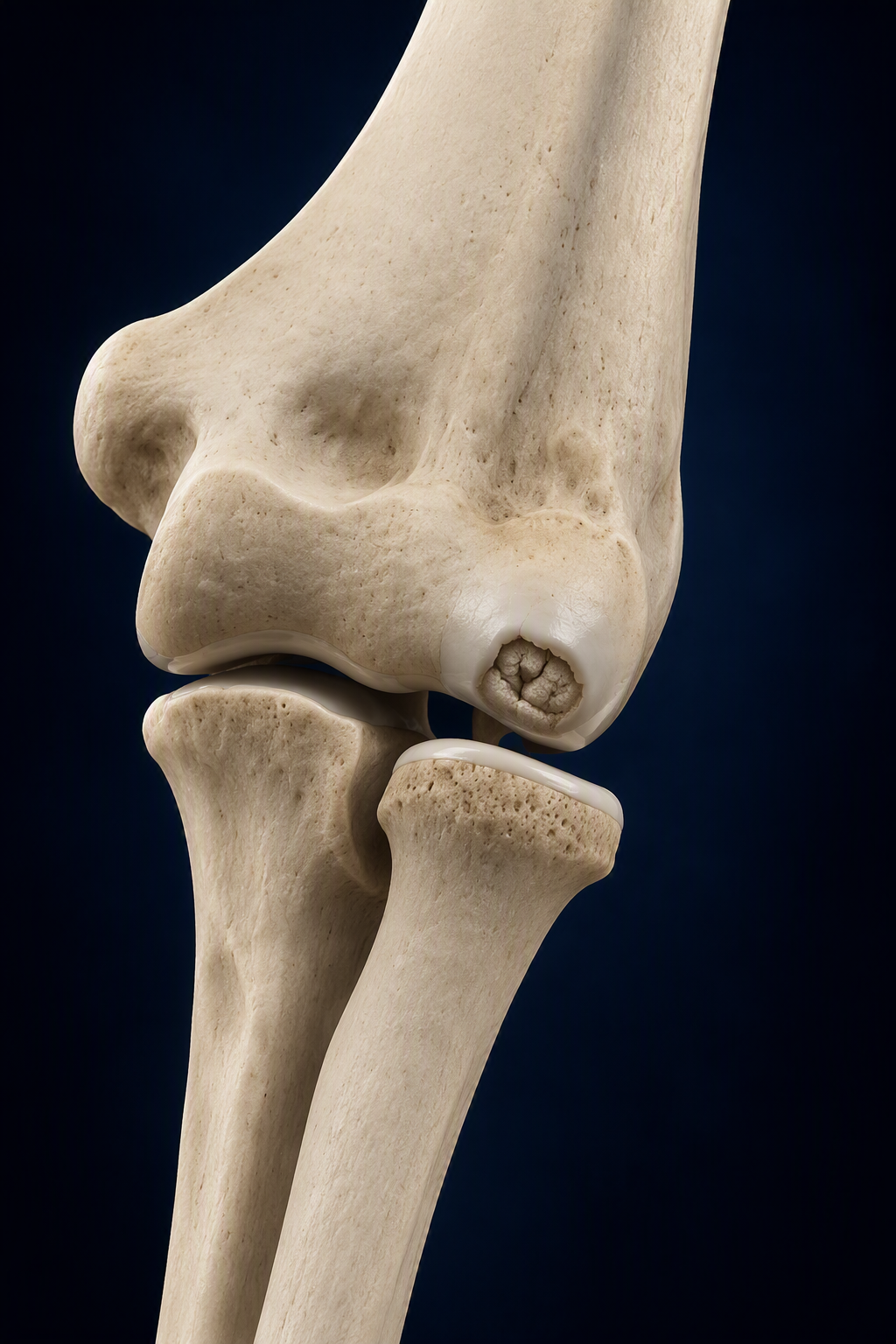
Osteochondritis Dissecans (OCD)
OCD occurs when the cartilage and underlying bone within the elbow become injured due to repetitive stress.
Common Symptoms
Lateral elbow pain
Locking or catching
Swelling
Loss of motion
Most commonly affects adolescent athletes.
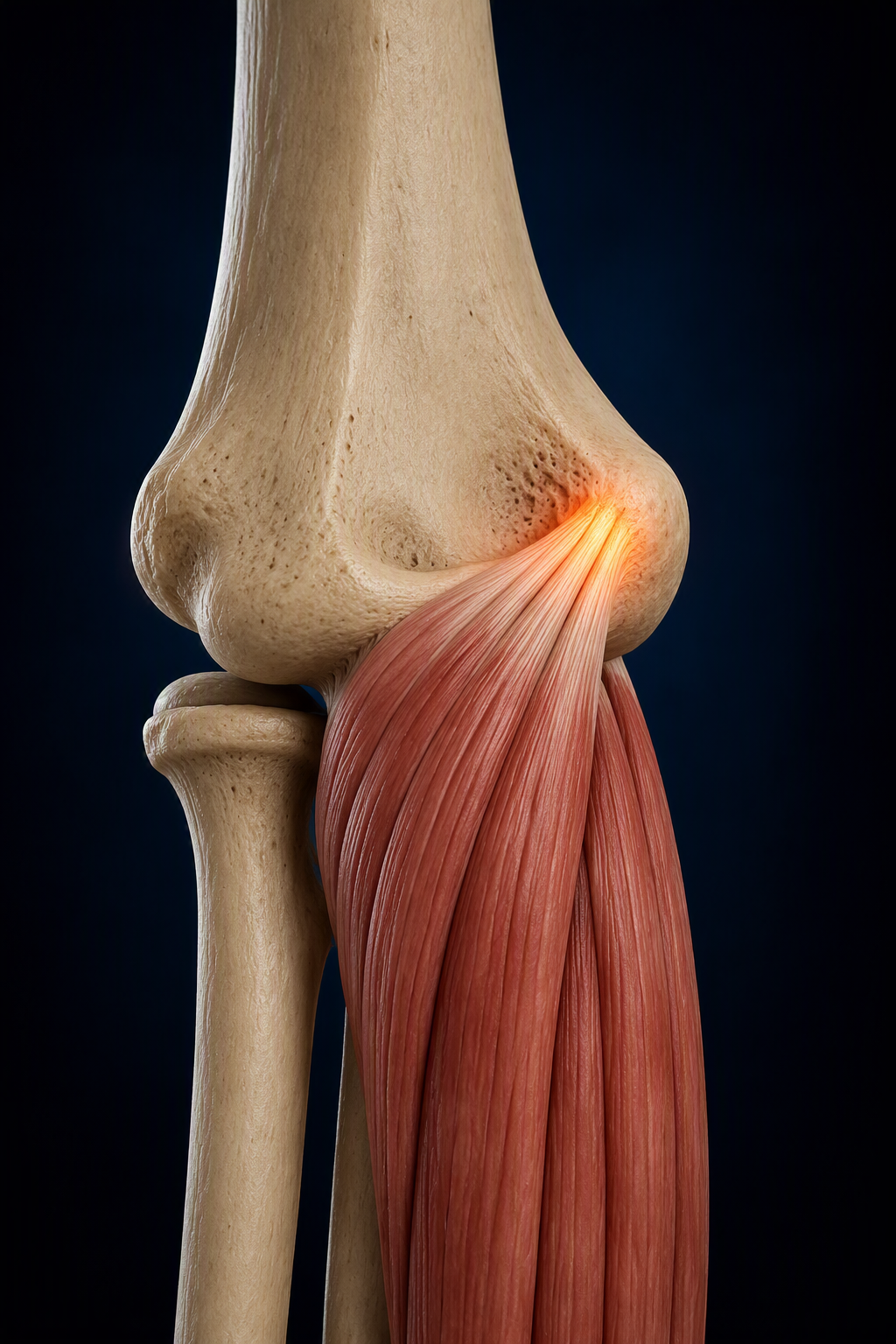
Flexor-Pronator Strain
The flexor-pronator muscles provide dynamic support to the UCL and may become strained from repetitive throwing.
Common Symptoms
Medial elbow pain
Pain with gripping
Pain during throwing
Forearm tightness
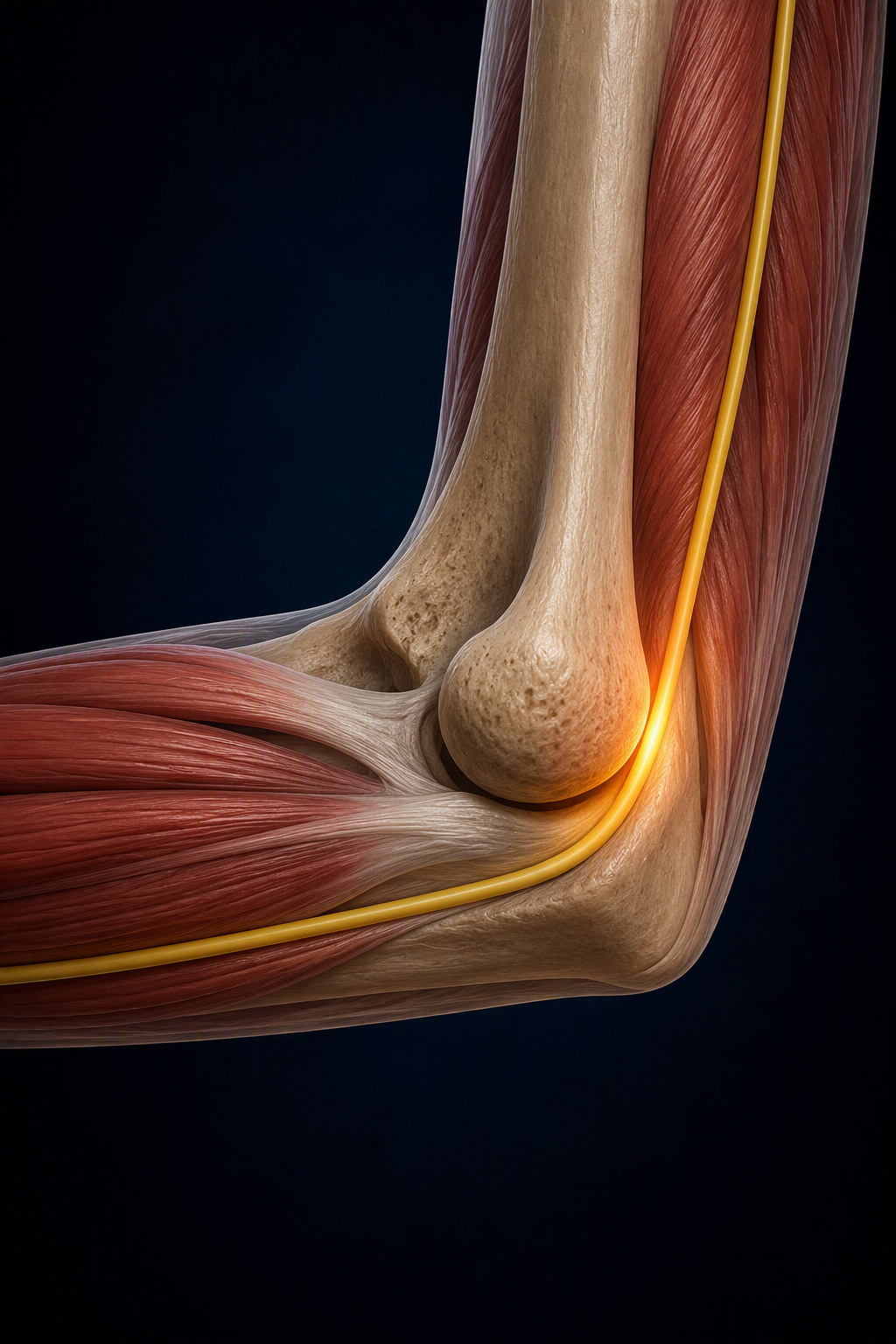
Ulnar Neuritis
Ulnar neuritis occurs when the ulnar nerve becomes irritated or compressed near the elbow. It commonly accompanies UCL injuries and other throwing-related elbow conditions.
Common Symptoms
Numbness or tingling in the ring and small fingers
Hand weakness
Medial elbow pain
Symptoms that worsen during or after throwing
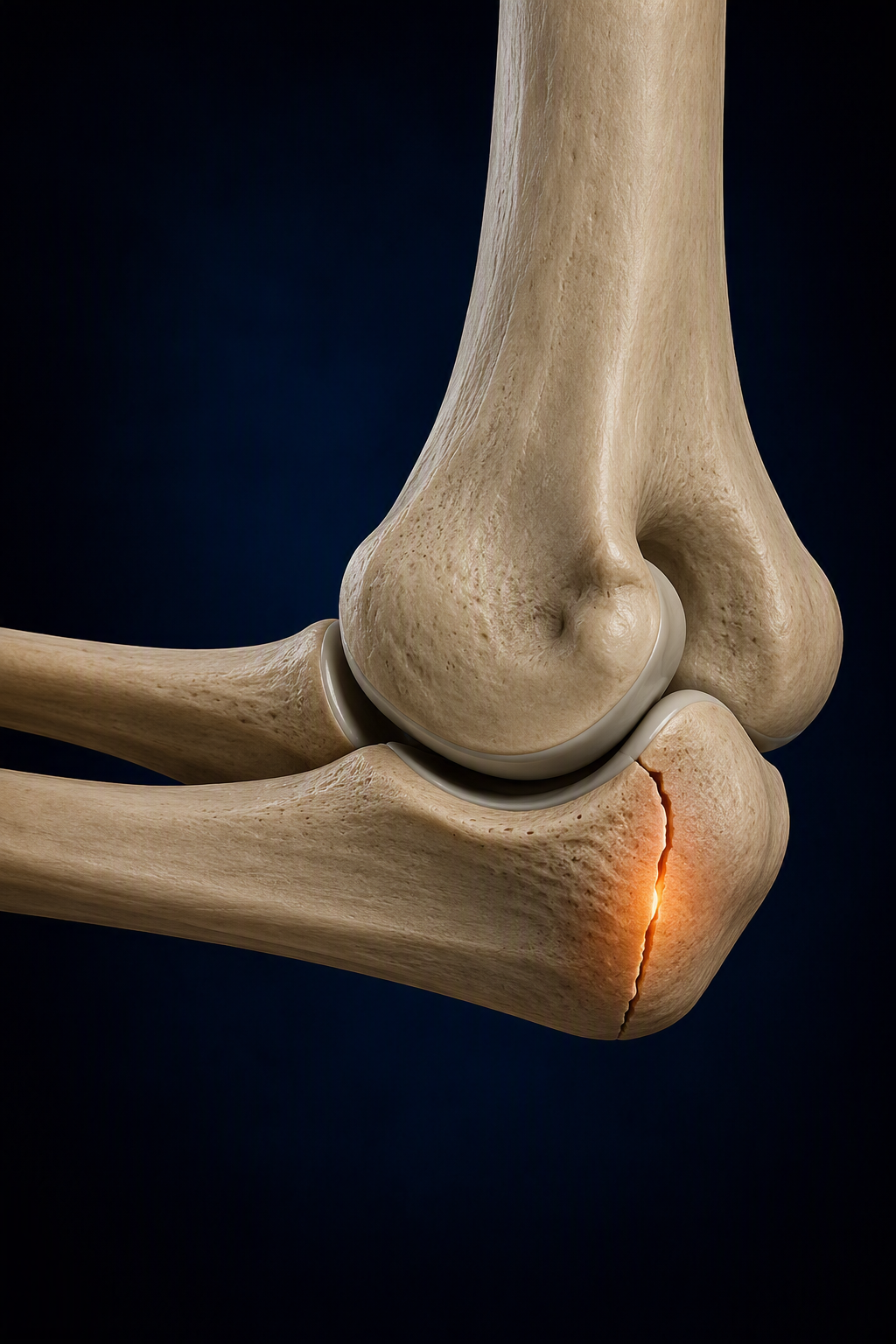
Olecranon Stress Fracture
An olecranon stress fracture is an overuse injury of the tip of the elbow resulting from repetitive extension forces during throwing. This injury is most commonly seen in pitchers and high-level throwing athletes.
Common Symptoms
Posterior elbow pain
Pain with throwing
Pain with terminal extension
Loss of velocity or performance
Tenderness over the tip of the elbow
Treatment Options
Non-Surgical Treatment
The majority of throwing-related elbow injuries can be successfully managed without surgery.
Treatment may include:
Physical therapy
Throwing mechanics evaluation
Activity modification
Structured return-to-throwing programs
Mobility and flexibility programs
Strengthening exercises
Workload management
The goal is to restore elbow function while addressing the underlying cause of the injury.
When Is Surgery Recommended?
Surgery may be considered when:
Symptoms persist despite rehabilitation
Mechanical symptoms are present
Cartilage injuries are identified
Loss of motion develops
Performance remains limited despite non-operative treatment
Treatment recommendations are individualized based on the athlete's age, diagnosis, and goals.
General Throwing Athlete Elbow
Frequently Asked Questions
-
VEO is a condition in which repetitive throwing causes irritation and impingement in the back of the elbow, leading to pain and loss of motion.
-
Little League Elbow is an overuse injury affecting the growth plate on the inner side of the elbow in young throwing athletes.
-
Yes. Most throwing-related elbow injuries improve with rest, structured rehabilitation, throwing modifications, and progressive return-to-throwing programs.
-
Osteochondritis dissecans (OCD) is a cartilage and bone injury within the elbow commonly seen in adolescent throwing athletes.
-
Most athletes successfully return to throwing following appropriate diagnosis, treatment, and rehabilitation.
-
It is normal to experience mild muscle fatigue after throwing, particularly during periods of increased activity or competition. However, persistent pain, loss of velocity, decreased command, swelling, loss of motion, mechanical symptoms (locking or catching), or pain that affects performance may indicate an underlying injury. Athletes experiencing these symptoms should be evaluated to identify the cause and prevent more significant problems from developing.
-
Elbow pain may result from UCL injuries, Little League Elbow, valgus extension overload, flexor-pronator injuries, cartilage injuries, or throwing overload.
-
Proper throwing mechanics, pitch count compliance, adequate recovery, strength training, shoulder mobility, and workload management can all help reduce injury risk.
-
Athletes with persistent pain, declining performance, loss of velocity, loss of motion, or recurrent symptoms should be evaluated by a sports medicine specialist.