Rotator Cuff Tears
Specialized care for partial and full-thickness rotator cuff tears, helping patients relieve pain, restore function, and return to the activities they love.
Understanding the Rotator Cuff
Anatomy of the Rotator Cuff
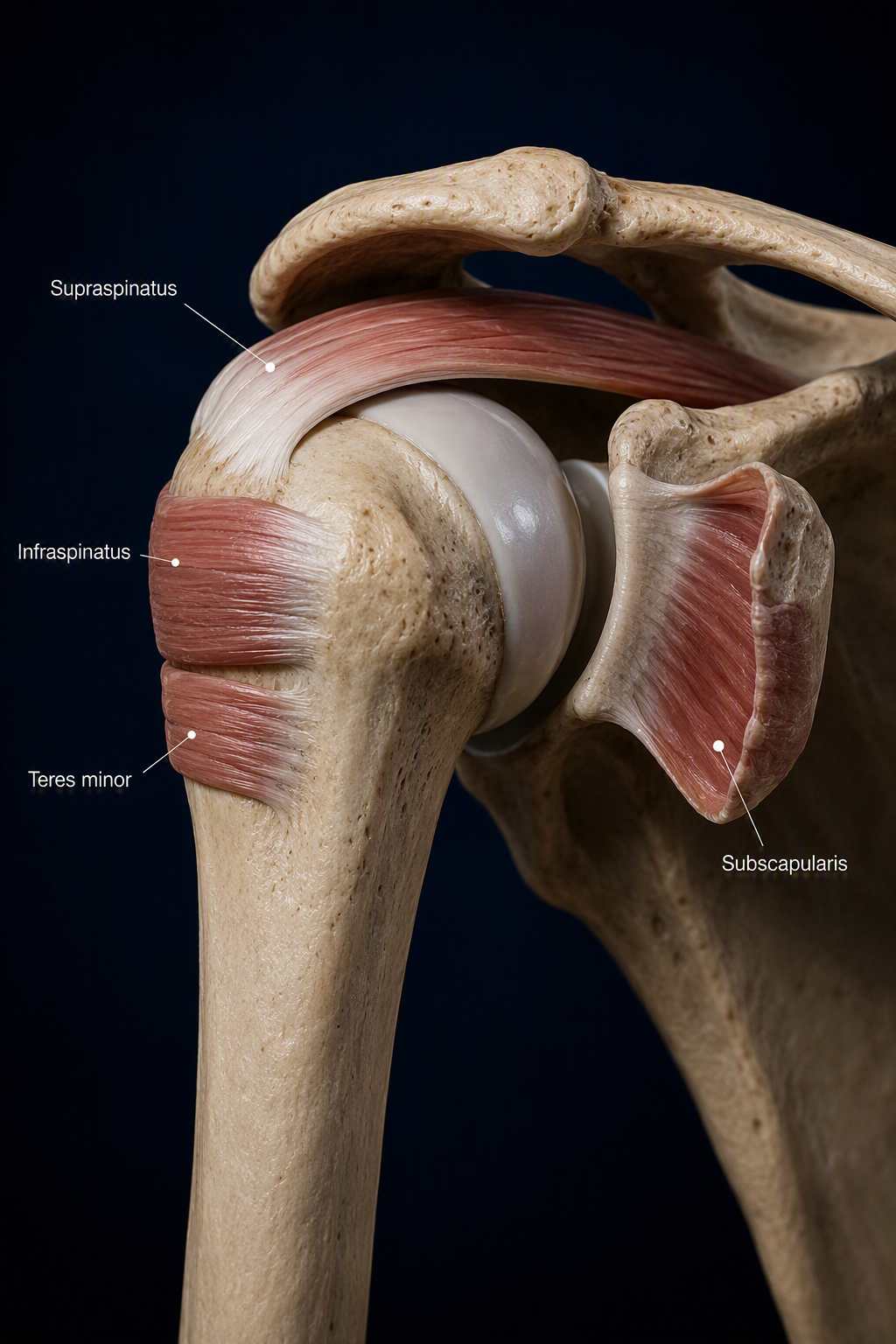
The rotator cuff is a group of four muscles and tendons that surround the shoulder joint. These tendons work together to stabilize the shoulder and help lift and rotate the arm.
The four rotator cuff muscles are:
Supraspinatus
Infraspinatus
Teres Minor
Subscapularis
Together, they help maintain normal shoulder mechanics and allow overhead activities such as lifting, throwing, swimming, golf, tennis, and pickleball.
What is a Rotator Cuff Tear?
Rotator cuff tears occur when one or more of the rotator cuff tendons become damaged or detach from the bone.
Common Causes
Age-related degeneration
Repetitive overhead activities
Heavy lifting
Falls or traumatic injuries
Athletic participation
Common Symptoms
Pain with overhead activity
Night pain
Weakness
Difficulty lifting the arm
Loss of shoulder function
Types of Rotator Cuff Tears
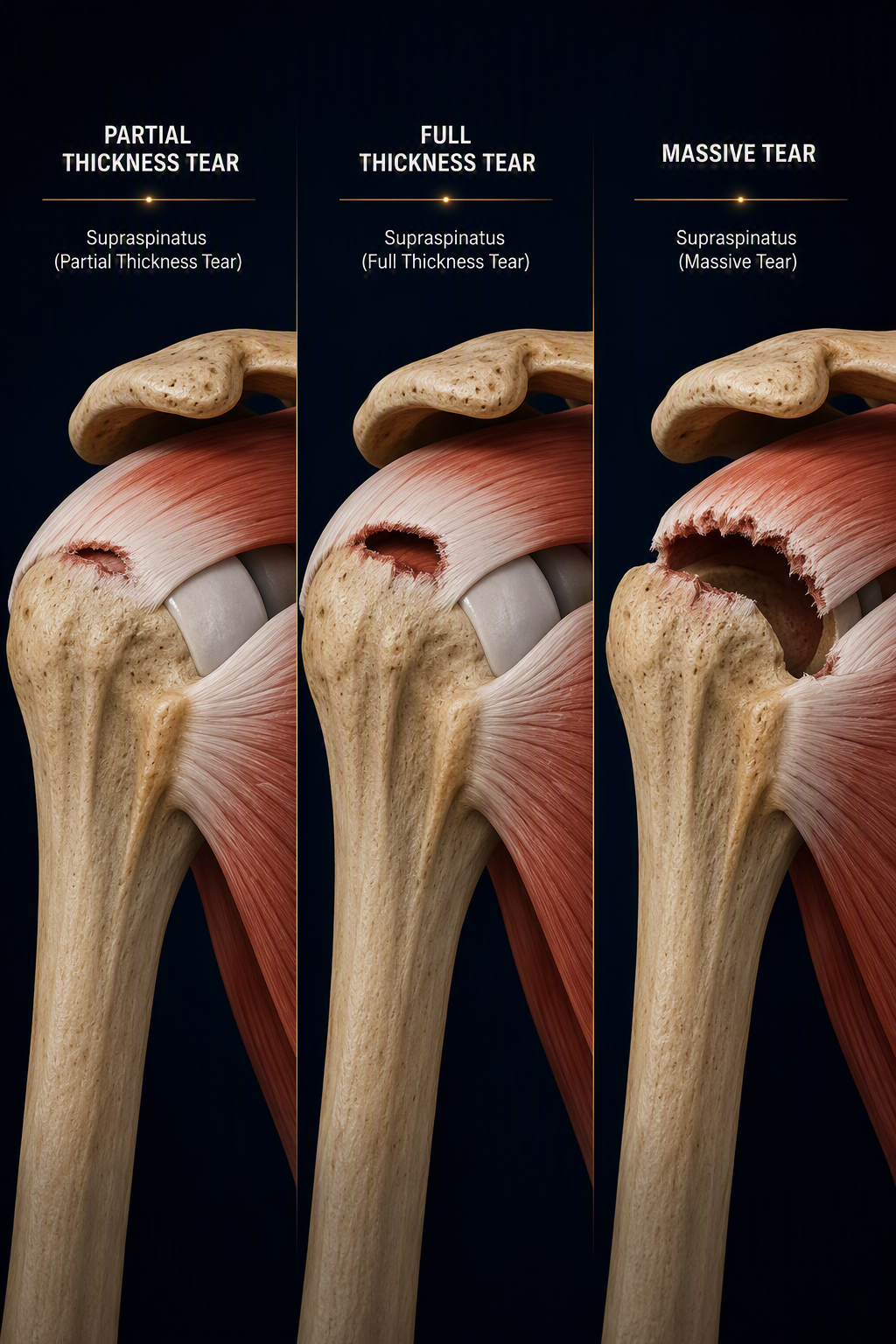
Partial Thickness Tears
The tendon is damaged but not completely torn through.
Full Thickness Tears
The tendon is completely detached from the bone.
Massive Tears
Large tears involving one or more rotator cuff tendons that may significantly affect shoulder function.
Treatment Options
Treatment may include:
Activity modification
Physical therapy
Anti-inflammatory medication
Corticosteroid injections
Home exercise programs
Non-Surgical Treatment
When is Surgery Recommended?
Surgery may be recommended for:
Full-thickness tears
Acute traumatic tears
Persistent pain despite conservative treatment
Significant weakness
Active individuals wishing to return to overhead activities
General Rotator Cuff
Frequently Asked Questions
-
No. Many partial-thickness tears and even some full-thickness tears can be successfully managed with physical therapy, activity modification, anti-inflammatory medications, and injections.
-
Most torn rotator cuff tendons do not heal back to the bone on their own. However, many patients can experience significant improvement in pain and function through non-operative treatment.
-
In many cases, yes. Physical therapy and guided exercise programs are often important components of treatment.
-
Many patients continue to do very well without surgery. Others may experience persistent pain, weakness, or progression of the tear over time. A discussion with your surgeon can help determine the best treatment plan.
-
Surgery may be recommended for patients with persistent pain, weakness, acute traumatic tears, larger tears, or those who have not improved with conservative treatment. The decision is individualized based on symptoms, imaging findings, activity level, and goals.
-
A partial tear damages only part of the tendon. A full-thickness tear extends completely through the tendon and may result in tendon detachment from the bone.
Rotator Cuff Surgery
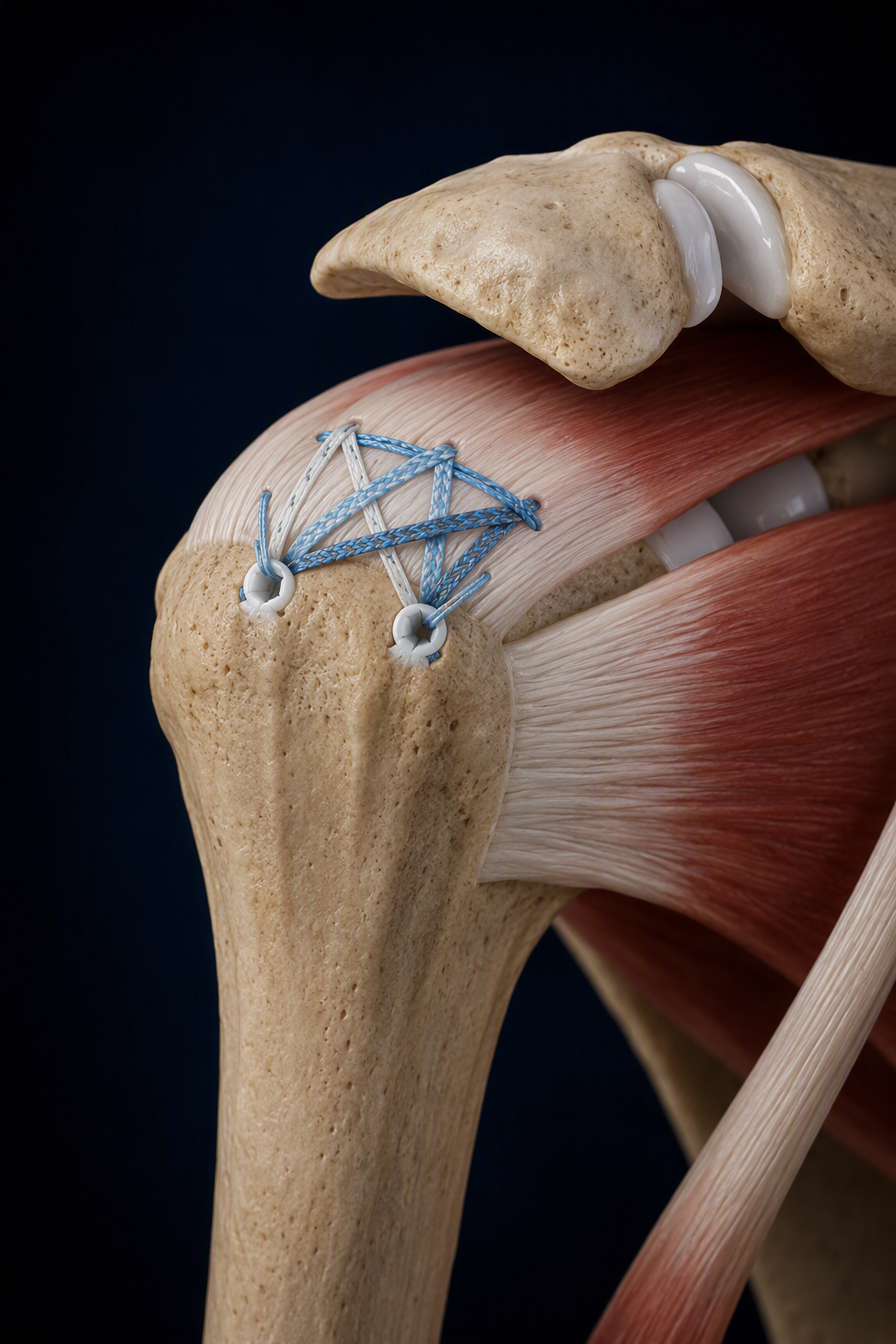
Rotator cuff repair is typically performed arthroscopically through small incisions around the shoulder or in an open fashion with a longer incision in order to fix larger tears.
Goals include:
Relieve pain
Restore strength
Improve function
Return to activity
Weeks 0-6
Sling protection
Early passive motion
Weeks 6-12
Progressive motion
Begin strengthening
Months 3-6
Advanced strengthening
Return to sports and recreational activities
6+ Months
Continued improvement in strength and function
Recovery Timeline
Patient Resources
Surgical Rotator Cuff
Frequently Asked Questions
-
Most patients receive a regional block unless there is a contraindication to it. Further anesthesia is determined by your anesthesiologist. Your anesthesiologist will speak with you before the procedure and address any of your questions or concerns.
-
Arthroscopy is a minimally invasive surgical technique that utilizes a fiber optic camera, called an “arthroscope” to allow a surgeon to view an affected joint without requiring a large incision.
-
You should plan to wear loose, comfortable clothing and supportive, stable shoes. Slip on shoes are easier to get into after surgery. Try to bring in a loose top that opens up in the front.
-
Dr. Danaher will decide when you are ready to start formal physical therapy. Therapy usually begins two to six weeks after surgery for rotator cuff repairs.
-
When you do not have any pain, inflammation, or swelling, you may discontinue cryotherapy. If you experience any discomfort or inflammation after exercising or returning to activity, resume your cryotherapy immediately. Even when you do not have immediate symptoms, you may utilize cryotherapy preventively to avoid any residual symptoms. Use for 3-7 days, 3-5 times per day for 30 minutes to 1 hour each session.
-
You can take the sling off for showering and to do elbow, wrist and finger exercises. However, you MUST wear your sling when active, in public, and when sleeping for the first 6 weeks after surgery. Ultimately, this will be decided by Dr. Danaher and may be determined by the extent of the procedure that has been done. You will wake up after surgery with your operated arm in a sling. There is a "pillow" that is part of the sling. This pillow is between your arm and body to help hold your arm in the correct position. The straps on the sling can be moved and adjusted for your comfort. Your elbow should be fully supported by the sling and you should not "shrug" your shoulder or "hold" your shoulder in place; relax the arm to let the sling work. You should wear your sling at all times with the exception of bathing, dressing and doing exercises for the next six weeks (unless otherwise directed by your care team). Be sure to wear your sling even when you sleep.
-
Your first office visit will be approximately 10-14 days after your surgery. Dr. Danaher will inform you on how often you will return for follow-up appointments.
-
Typically 6 weeks after your surgery is a safe time to start driving, provided you are no longer using a sling or taking a narcotic medication. It is important to practice controlling your car or vehicle in an empty parking lot to make sure that you can exercise safe and reasonable control of the vehicle prior to getting on a busy freeway.
-
This depends on the type of surgery you had, and the type of work you do (sedentary/desk job vs. physically demanding active work). It is very important to discuss this issue with Dr. Danaher before your surgery.
-
Do not wait to see if it will heal itself. You should call Dr. Danaher's office right away. You may need to schedule an evaluation.
-
Surgery may be recommended for patients with persistent pain, weakness, acute traumatic tears, larger tears, or those who have not improved with conservative treatment. The decision is individualized based on symptoms, imaging findings, activity level, and goals.
-
Dr. Danaher will make this decision on a case-by-case basis, taking into consideration the type of surgical procedure you had; your normal range of motion, strength, and flexibility; and symptoms. Many patients return to sport-specific activities (e.g. golf or tennis) will normally be allowed around 4 to 6 months post-operatively depending on the type of surgery and injury.
-
With regular physical therapy, range of motion should be nearly restored within six to twelve weeks depending on the size and extent of the tear. With continued strengthening exercises, both strength and function of your shoulder should be dramatically improved at three months, with complete recovery within a year after surgery.
-
Yes. But other valuables (Laptops, iPads, iPods, Jewelry, etc) should be left at home.